
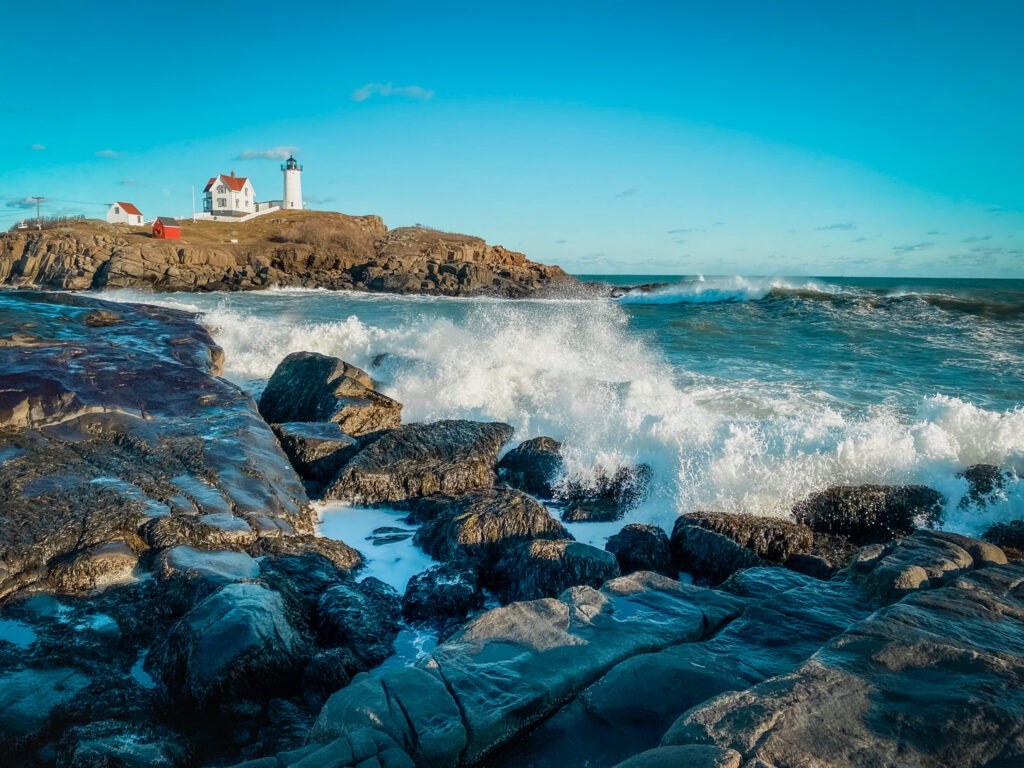
Are you looking to plan a trip to New England? Whether you are booking a week, a weekend, a solo trip, or a family adventure, this is the perfect place to get started.
New England looks small on a map, but it is not small once you’re actually driving it.
That’s the thing almost nobody tells you before your first trip here: this is six states with six completely different personalities, and the difference between a trip that feels effortless and one that feels like you spent your whole vacation in the car usually comes down to one thing: realistic planning before you ever book a hotel.
I’ve spent years exploring this region on foot and by car and lived here most of my life, which means I’ve also learned exactly what “just a quick drive” costs you. This guide is the one I send my friends who want to come to New England. Not a list of pretty towns, a real framework for figuring out where to go, how much time you actually need, and what to skip without guilt.
Whether you’ve got a weekend, a week, or a full month, here’s how to think about it.
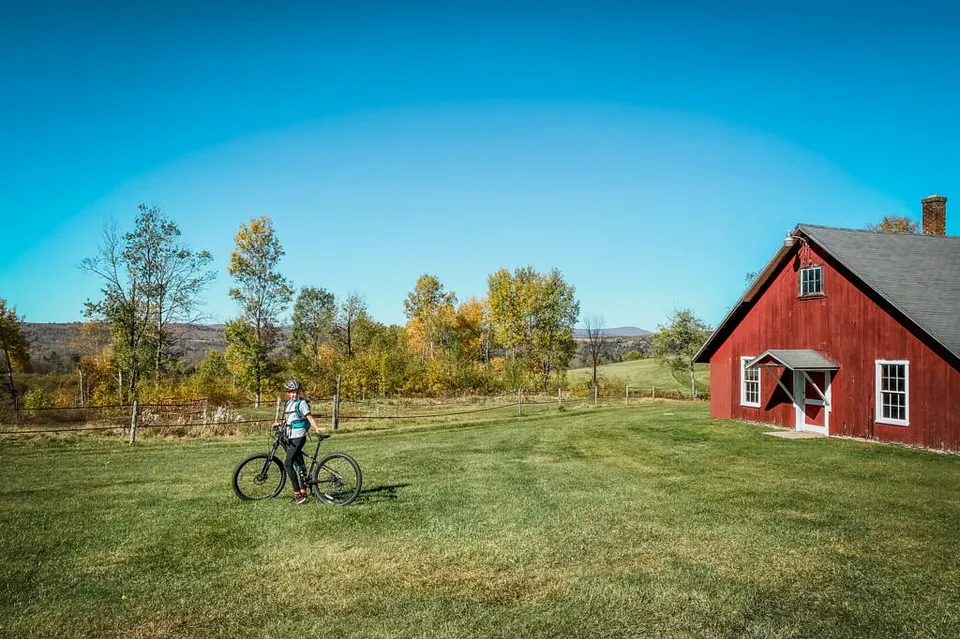
How New England Actually Works
The six states, honestly
New England isn’t six equal slices of the same pie. Some states you could spend a month in and barely scratch the surface; others you can genuinely see well in a long weekend. While there is a certain flavor to all of New England, it’s helpful to decide whether you want mountains, coastline, lakes, music, cities, or culture (or all of it)!
Maine is bigger than it looks, and the coast alone can eat a full week if you let it.
New Hampshire punches above its size: the White Mountains could fill a week on their own, and the Seacoast is one of the most underrated home bases in the region.
Vermont is small on the map but built for slow travel; it doesn’t reward rushing.
Massachusetts is really three trips wearing one state’s name: Boston, the Berkshires, and the Cape & Islands are three different vacations.
Rhode Island is the most underestimated state here; Newport alone is worth two or three days.
Connecticut is the quiet one: the Litchfield Hills and the Mystic coast are both excellent and far less crowded than their neighbors.
The geography reality check
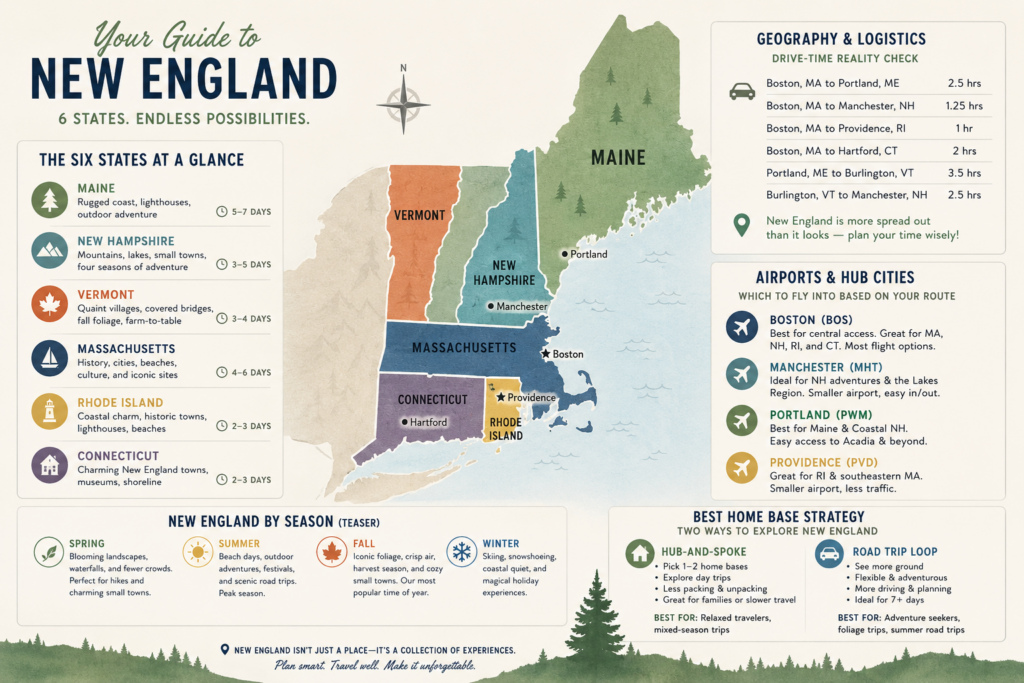
The single biggest planning mistake I see: assuming New England is small because it’s drawn small on a US map. I’ve seen so many people plan a week long trip to New England that has them in a car the whole time! A few real numbers to recalibrate:
- Boston to Bar Harbor, Maine: about 4.5–5 hours, no stops
- Boston to Burlington, Vermont: about 3.5 hours
- The NH Seacoast to the White Mountains: about 1.5 hours
- Newport, RI to Mystic, CT: about 1 hour: an easy, natural pairing
- Boston to Provincetown: 2.5–3 hours, longer in summer traffic
Coastal Maine and northern New Hampshire/Vermont need real time built in. Southern New England: Rhode Island, Connecticut, eastern Massachusetts, is far more compact and forgiving if your trip is short.
Choosing your airport
- Boston Logan (BOS): Best for trips centered on Massachusetts, Rhode Island, Connecticut, or southern NH/Maine, and simply the easiest airport with the most flight options.
- Manchester-Boston Regional (MHT): Smaller and easier to navigate, and closer to the White Mountains and Maine coast than Boston without the city traffic.
- Portland International Jetport (PWM): The right call if Maine is your main focus.
- T.F. Green (Providence, PVD): A good fit if Rhode Island or southern Massachusetts anchors your trip.
Hub-and-spoke vs. the road trip loop
Hub-and-spoke: one home base, day trips out from it, is the better call for weekend trips and families who’d rather not repack every night.
The road trip loop: moving every 1–2 nights, makes more sense for week-plus trips where you want to cover multiple distinct regions. My rule: under 5 days, hub-and-spoke almost always wins.
How Much Time You Actually Need
This is the part that separates a good New England trip from a rushed one, and it comes down to matching your itinerary shape to your actual number of days.
If you have a weekend (2–3 days)
Pick one region, not the whole map. A weekend isn’t enough time to see coastal Maine and the White Mountains and Boston: it’s enough time to see one of those well. A coastal Maine weekend based in Portland or Camden, a White Mountains weekend based in North Conway, or a NH Seacoast weekend (my personal pick, and I’m biased) all work, as long as your home base stays within 45–60 minutes of everything you actually want to do. The moment you’re planning 90-minute one-way drives on a two-day trip, you’re spending the weekend in the car.
If you have a week (5–7 days)
A week is enough time to build a real route: what I think of as a “spine” through 2–3 connected regions, with 2–3 nights in each rather than a different bed every night.
- A coastal-and-food route (Boston → NH Seacoast → Midcoast Maine) stays compact and forgiving.
- A mountains-and-outdoors route (White Mountains → Vermont’s Green Mountains) is the pick for real hiking time and works especially well for fall foliage trips.
The most common mistake at this length is overplanning: treating a week like three weekend trips stacked together. Pick your spine, then genuinely leave one day unplanned.
Here are a few ideas to get you started:
- Plan the best of New Hampshire with the Best New Hampshire Road Trip: 4 Amazing Options — scenic drives, short hikes, small towns, and fall foliage highlights.
- Explore the Cape with How to Plan the Ultimate Cape Cod Adventure — a complete trip plan for beaches, nature walks, history, and seaside towns.
- Make the most of Acadia with The Perfect Acadia National Park Itinerary For 1-4 Amazing Days — choose the right length of visit and plan your hikes, scenic drives, and coastal activities.
- Explore New England in this Itinerary – explore all of New England including Connecticut and Rhode Island
If you have two weeks or more
Now you can sequence all six states without backtracking: start and end near your airport, move in one geographic direction, and budget a minimum of 2 nights per stop (3 in the regions you care most about). Not everyone needs this as one marathon trip, either if you’re local to the Northeast, several separate long weekends spread across different seasons can actually show you more of New England than one long loop, since you’d experience it in more than one season.
Want the full trip-length frameworks, including specific route maps and day-by-day shapes? Check in out in my newsletter.
New England by Season
- Spring (April–May): The least crowded, the muddiest, and honestly the least glamorous: but shoulder-season prices and quiet trails make it worth considering if you’re flexible. April might be my least favorite month, especially in northern New England.
- Summer (June–August): Peak everything. Book lodging early, especially for coastal Maine and the Cape.
- Fall (September–October): The main event, and for good reason — though timing peak foliage is trickier than most people expect. Color moves south and downhill over 4–6 weeks, starting in northern Maine and high elevations in late September and not reaching southern New England until early-to-mid November some years. If you’re locking in dates months ahead, plan around a region and a date range rather than one exact “peak” day.
- Winter (November–March): A completely different New England: ski towns come alive, coastal towns go quiet, and it’s one of the most underrated seasons if winter activities are your thing.

A Region-by-Region Primer
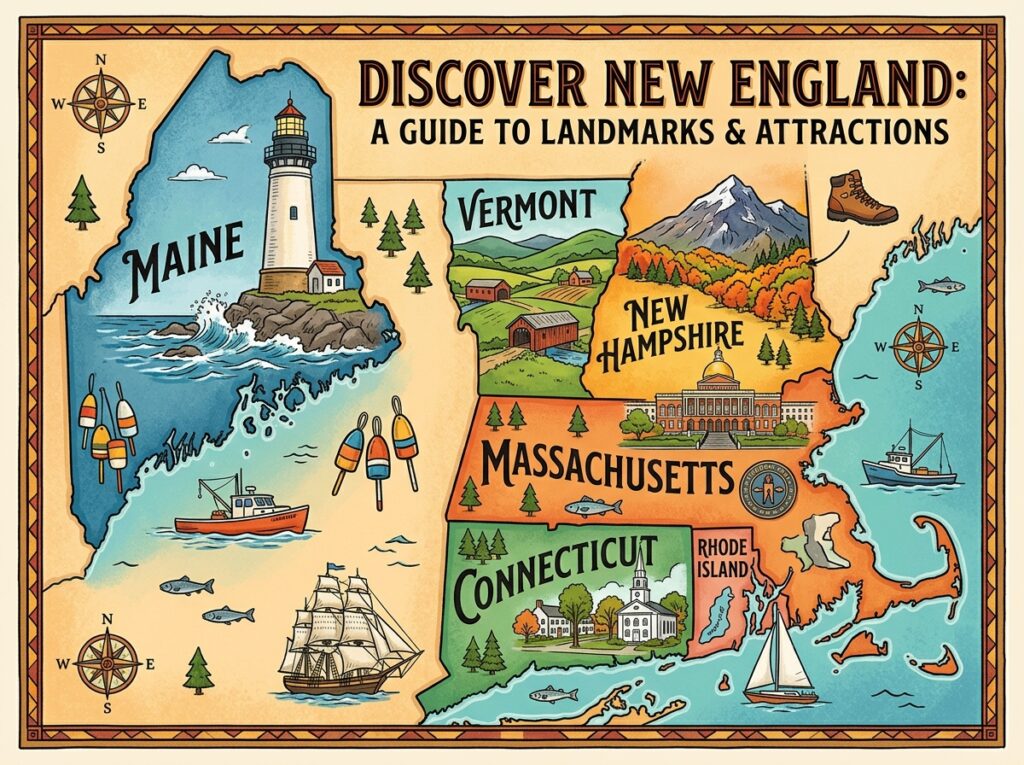
Quick hits on each state” what it’s known for, who it’s best for, and roughly how long you need. Full destination guides for each of these are coming as their own pieces, so bookmark this as your cheat sheet in the meantime.
Maine: Known for its coastline, lobster, and a wild interior that’s bigger than most people realize. Best for outdoor-focused travelers and food lovers. Give it a minimum of 3 days for the coast alone.
New Hampshire: The White Mountains get the fame, but the Seacoast and Lakes Region deserve equal billing. Best for hikers and families. A weekend covers one sub-region well.
Vermont: Small on the map, built for slow travel. Best for anyone who wants to actually unwind, not just check boxes. Give it 3–4 days minimum.
Massachusetts: Really three trips in one: Boston, the Berkshires, and the Cape & Islands. Don’t try to combine all three in under a week.
Rhode Island: The most underrated state on this list. Newport alone is one of the best 2–3 day coastal trips in New England.
Connecticut: The quiet one. The Litchfield Hills and the Mystic coast are both excellent and far less crowded than their neighbors.
A Few Practical Basics
Do you need a car? Almost certainly, outside of Boston and Providence proper. Public transit between regions is limited, and a lot of the best parts of New England simply aren’t reachable without one. There are a few trains, but this is pretty limiting.
When should you book lodging? For peak summer coastal trips or peak foliage weekends, book as early as you possibly can: some inns in popular foliage towns fill a year in advance for the best dates. Off-peak, 2–4 weeks out is usually fine.
What should you pack? Layers, no matter the season: coastal mornings and mountain evenings run cooler than you’d expect, even in summer. Fall means real temperature swings within a single day. Winter means genuine cold-weather gear in the northern states. Spring means waterproof footwear; mud season lives up to its name.
What’s actually worth the drive, and what isn’t? This is exactly what the region-by-region and season-by-season guides are built to answer: this overview is your starting point, not your final word.
Where to Go From Here
This guide is meant to be the map before you zoom in. For deep, personally-hiked trail guides with real trail stats, difficulty, and hop over to Chasing ADVNTR. For specific spots, itineraries, and the growing regional directory, that’s what’s building here on Uncover New England.
If you want the fully detailed version of everything above: specific route maps, sample day-by-day frameworks for every trip length, and a deeper practical toolkit, that lives in my complete paid guide on Substack.
And if you’re planning a trip and want the shorter version delivered straight to your inbox along with the rest of what I’m finding around New England, subscribe below I send twice a week, and it’s free.

Author: gstuppy
Gretchen is a New Hampshire-based travel writer, outdoor adventurer, and founder of New England Uncovered. With over 20 years of experience in outdoor education and a passion for exploring off-the-beaten-path destinations, she shares firsthand guides to New England's best hikes, hidden gems, and outdoor adventures. When she's not writing, you'll find her hiking, paddling, or exploring somewhere new with her family.