
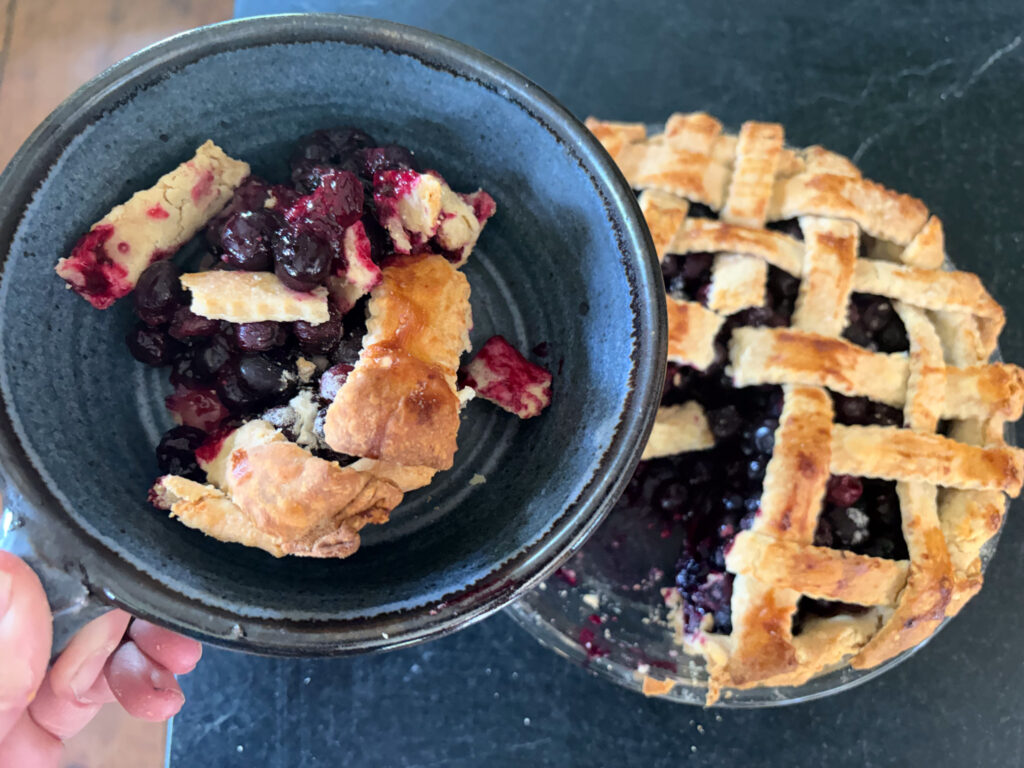
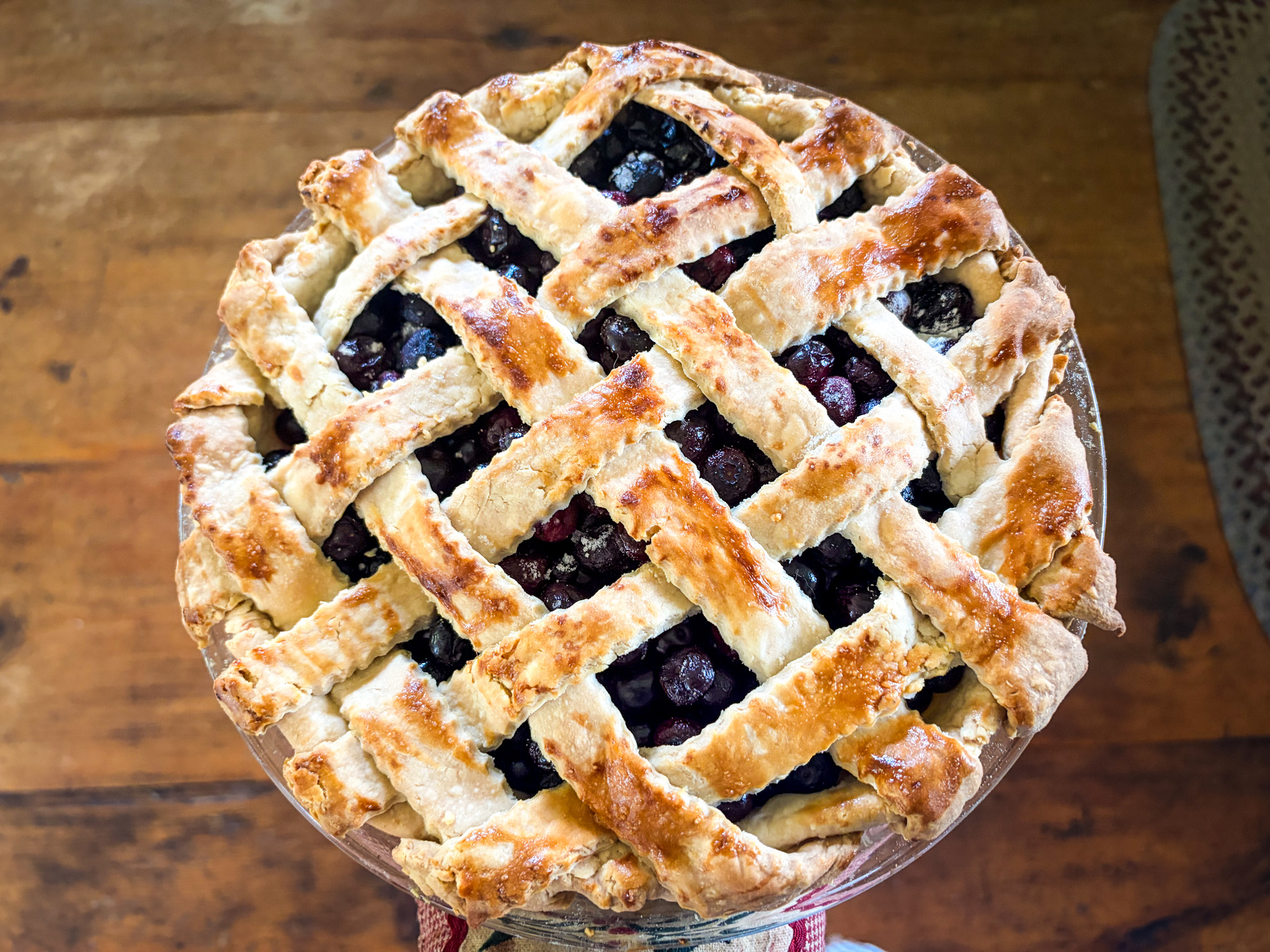
If there’s one dessert that says “New England summer” as clearly as this state itself, it’s a blueberry pie made with fruit picked that same week (although a good peach crisp comes pretty close).
Like most old New England recipes, this one is stripped down to the essentials: fruit, sugar, a little flour, butter, water, salt, and an egg for the glaze. No shortcuts needed, and none of the thickeners or add-ins that show up in a lot of modern versions.
See all our favorite New England Recipes.
A bit of a Background
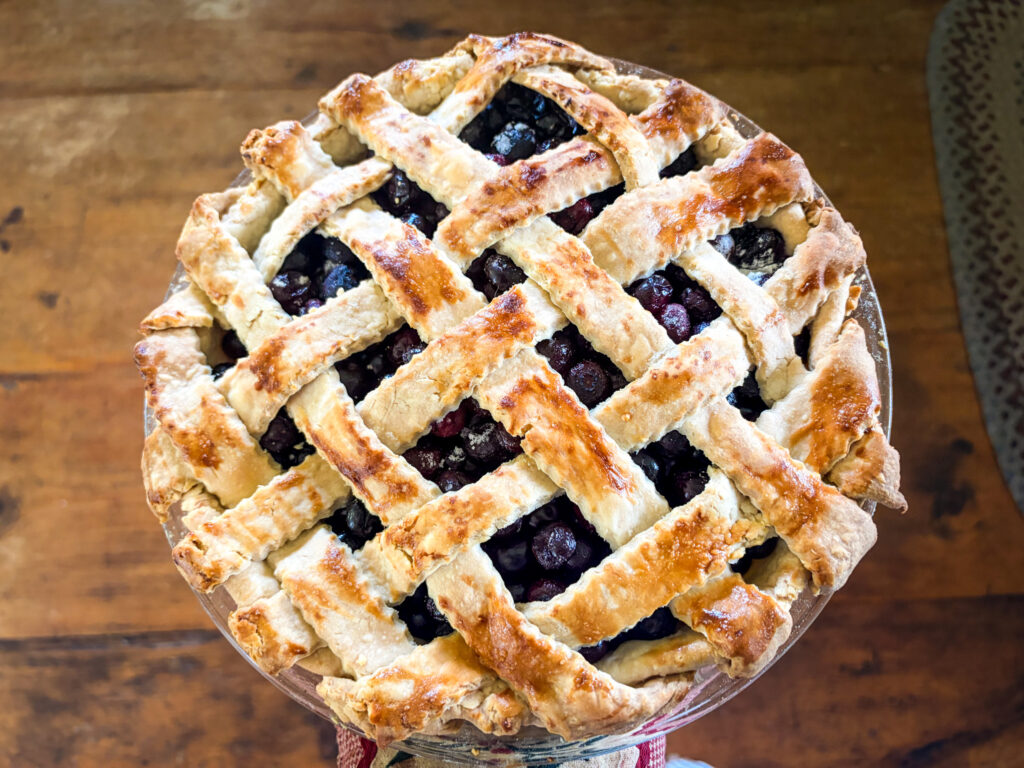
This recipe traces back to a mid-1800s butter-crust pastry, paired with a simple blueberry filling adapted from a New England food-history cookbook. There’s a reason it’s survived this long: the filling is barely sweetened, so the blueberries themselves do the work, and the all-butter crust holds up to a long, slow bake without getting soggy.
Two things matter most here. First, chill the dough properly — at least an hour, ideally overnight — so the butter stays cold enough to create a flaky crust. Second, don’t rush the bake: a hot start followed by a longer, gentler finish is what sets the filling without scorching the top.
Takes a little planning since the dough needs to rest, but the active work is minimal. Makes one 9-inch pie, enough for six to eight slices.
Made Here
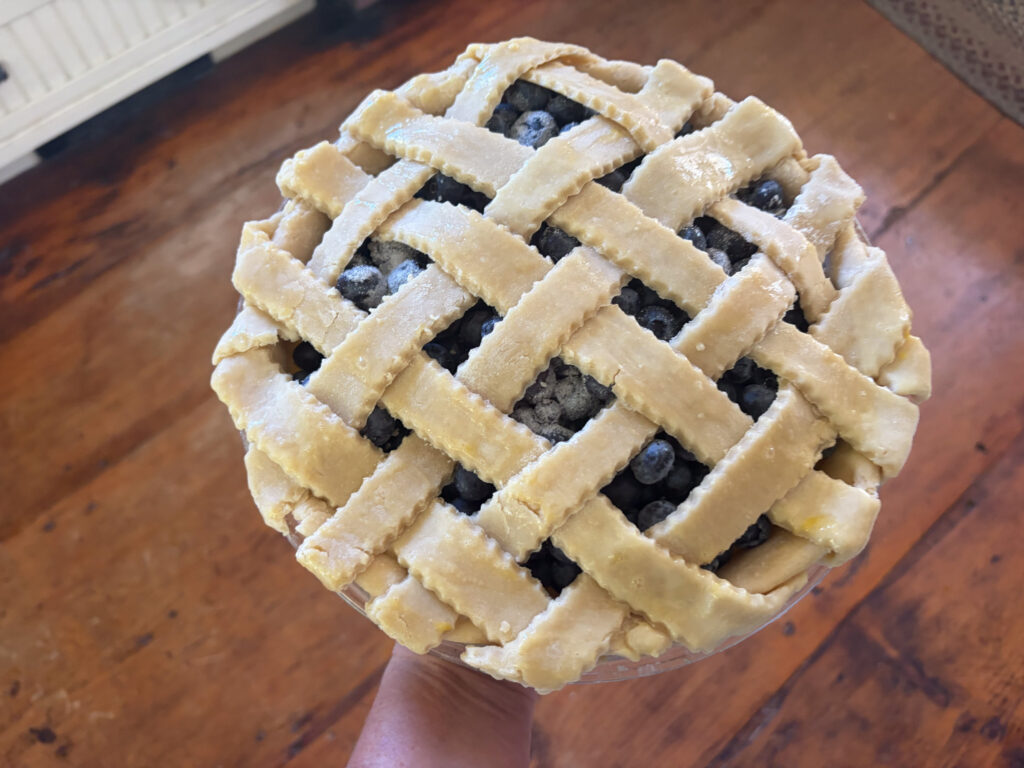
Peak blueberry season across New England runs through late July and August, and that’s when this pie is at its best. Farm-stand or pick-your-own berries (even if the weather forces you to buy already-picked) will always beat anything out of season. If you can get to a local orchard or berry farm nearby, do it, the fresher the fruit, the less sugar you’ll need.
A dollop of whipped cream or a scoop of vanilla ice cream on the side is optional, but it’s hard to say no to.
Ingredients
Method
- Preheat the oven to 425°F with a rack in the middle position.
- Whisk the flour and salt together in a large bowl. Cut in the cold butter with a pastry blender or two knives (or pulse briefly in a food processor) until the butter breaks down into pea-sized pieces.
- Add the cold water a little at a time, mixing just until the dough comes together — you may not need all of it, or may need a touch more.
- Divide the dough into two equal discs, wrap each in plastic, and refrigerate for at least 1 hour, or overnight.
- Let the dough sit out for a couple of minutes to soften slightly, then roll one disc out on a floured surface into a circle large enough to overhang your pie plate by about an inch. Ease it into the dish and shape the edge however you like.
- Toss the blueberries, sugar, and flour together, then fill the crust with the mixture.
- Roll out the second disc and either lay it whole over the top (cutting a few vents for steam) or cut it into strips or shapes to arrange over the filling. There are many ways to make the top of a blueberry pie.
- Brush the top crust with the beaten egg and sprinkle generously with coarse sugar.
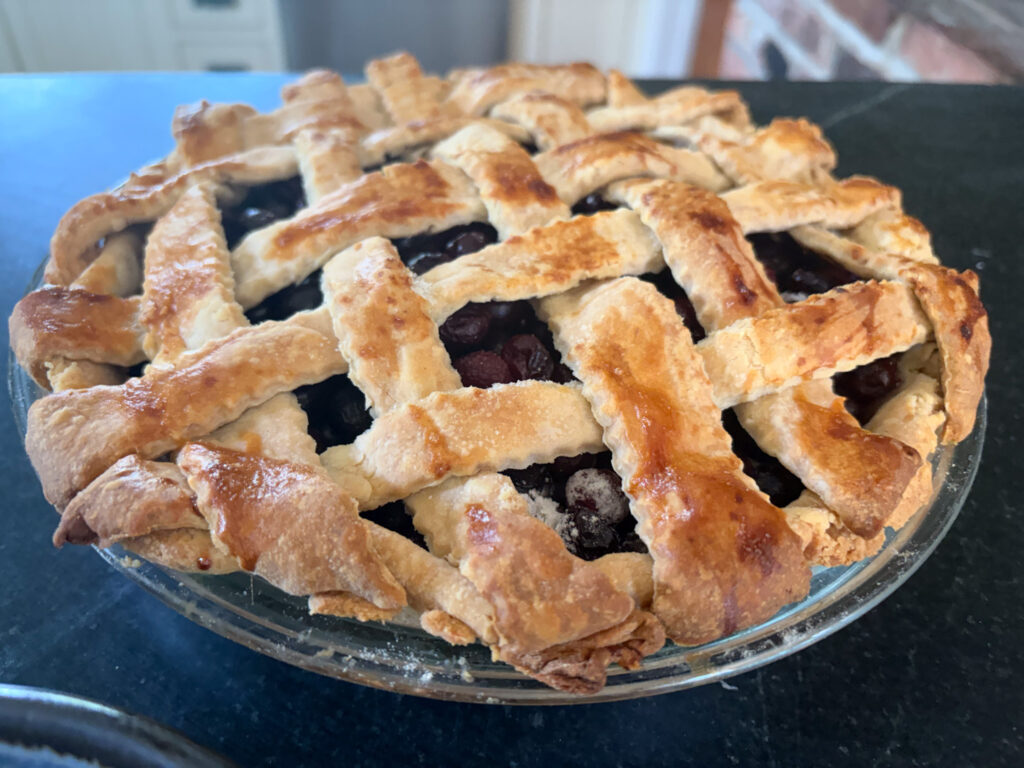
- Bake at 425°F for 20 minutes, then reduce the heat to 350°F and continue baking for another 45–55 minutes, until the crust is golden and the filling bubbles. Tent with foil if the crust browns too fast, and consider placing a baking sheet on the rack below to catch any drips.
- Cool on a wire rack before slicing. Best served warm.
FAQ
Why does the butter need to stay cold? Cold butter creates small pockets of fat that melt in the oven, producing steam and separating the dough into flaky layers. If the butter softens too much while you’re working, the crust bakes up dense instead of flaky.
Can I use frozen blueberries instead of fresh? Yes, though the filling may release more liquid as it bakes. Toss frozen berries in the flour while still frozen and expect to add a few extra minutes to the bake time.
Why does the oven temperature change partway through baking? The hot initial blast helps the crust set and start browning quickly. Dropping the temperature afterward lets the filling cook through slowly without burning the crust.
Can I make the pie ahead of time? Yes, it keeps well at room temperature for a day, and in the fridge for up to three days. It’s best served slightly warm or at room temperature rather than straight from the fridge. Eat it for dessert, or my favorite: eat it for breakfast!
Want more ideas? Get them in your inbox.

Author: gstuppy
Gretchen is a New Hampshire-based travel writer, outdoor adventurer, and founder of New England Uncovered. With over 20 years of experience in outdoor education and a passion for exploring off-the-beaten-path destinations, she shares firsthand guides to New England's best hikes, hidden gems, and outdoor adventures. When she's not writing, you'll find her hiking, paddling, or exploring somewhere new with her family.